

CEMENT and CLINKER
Cement:
Portland Cement – ORDINARY GREY PORTLAND CEMENT 42.5 R – BS 12/1996 OR DIN EN 197-1:2000 OR ASTM C-15 Portland cement (often referred to as OPC, from Ordinary Portland Cement) is the most common type of cement in general use around the world because it is a basic ingredient of concrete, mortar, stucco and most non-specialty grout. It is a fine powder produced by grinding Portland cement clinker (more than 90%), a limited amount of calcium sulfate (which controls the set time) and up to 5% minor constituents as allowed by various standards There are two types of gray Portland cement: TS EN 197-1-CEM I with 42.5R and 52.5N standards. The strength of these types depends on the high amount of C3S in the cement.
These are the most popular cement types, especially in the high strength concrete class and in the construction of tall buildings. It is popular in pre-stretched prefabricated applications in particular, tunnel mould systems and in the construction of mass housing.
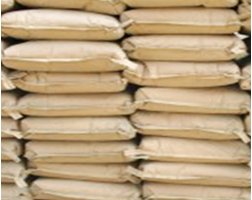
Application
- Building Construction
- Ground granulated blast furnace slag cement
- Pozzolana cement
- Silica fume cement
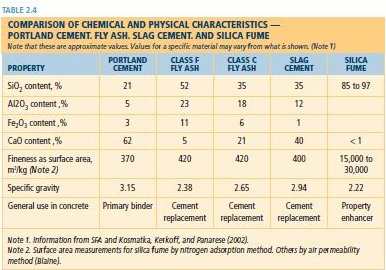
Typical Properties
| Physical Requirements | Requirement as perIS:12269:1987 | Unit | Laboratory Test Result |
|---|---|---|---|
| Fineness Specific Surface | 225 ( Min ) | m2/kg. | 325 |
| Standard Consistency | % | 31.50 | |
| Setting time (1) Initial (2) Final |
30 ( Min ) 600 ( Max ) | Minutes Minutes |
125 175 |
| Soundness Expansion measured by | 10.0 ( Max ) 0.80 ( Max ) | m.m. % | 10.12 |
| (1) Le – chatelier Method (2) Auto Clave |
|||
| Compressive Strength | 27 ( Min ) | Mpa | 50 |
| (2) 168 ± 2h (7 Days) | 37 ( Min ) | Mpa | 61 |
| (3) 672 ± 4h (28 Days) | 53 ( Min ) | Mpa | 72 |
Chemical Requirements
| Lime Saturation Factor | 0.80 to 1.02 | Ratio | 0.90 |
| Alumina Iron Ratio | 0.66 ( Min ) | Ratio | 1.36 |
| Insoluble Residue(by mass) | 3.0 ( Max ) | % | 0.89 |
| Magnesia(by mass) | 6.0 ( Max ) | % | 1.32 |
| Sulphuric Anhydride(by mass) | 3.0 ( Max ) | % | 1.76 |
| Loss on ignition | 4.0 ( Max ) | % | 1.02 |
| Chloride Content(by mass) | 0.10 ( Max ) | % | 0.035 |
The above cement complies with the requirement of IS : 12269 : 1987 For 53 Grade Ordinary Portland Cement
Product : CEMENT CLINKER
Clinker is lumps or nodules, usually 3-25 mm in diameter, produced by sintering limestone and alumino-silicate during the cement kiln stage.
Clinker is ground (usually with the addition of a little gypsum, that is, calcium sulfate dihydrate) to become Portland cement. It may also be combined with other active ingredients or chemical admixtures to produce.
Clinker, if stored in dry conditions, can be kept for several months without appreciable loss of quality. Because of this, and because it can easily be handled by ordinary mineral handling equipment, Clinker is also shipped to grinding plants in areas where cement-making raw materials are not available.
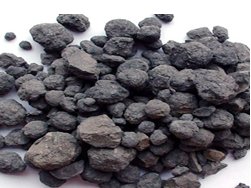
Application
OPC & PPC Cement Production
Typical Properties
| Physical Requirements | Laboratort Test Result | Unit |
|---|---|---|
| Loss on ignition (LOI) | 0.30 | % |
| Silica (SiO2) | 21.56 | % |
| Aluminium Oxide (Al2O3) | 5.36 | % |
| Iron Oxide (Fe2O3) | 4.00 | % |
| Calcium Oxide (CaO) | 64.65 | % |
| Magnecium Oxide(MgO) | 1.22 | % |
| Sulphuric Anhydrus (SO3) | 0.48 | % |
| Insoluble Residue (IR) | 0.26 | % |
| SM | 2.30 | |
| MA | 1.34 | |
| LSF | 0.93 | |
| C3S | 52.09 | |
| C2S | 22.60 | |
| CBA | 7.44 | |
| C4AF | 12.16 |
| Mechanical Testing | Laboratort Test Result | Unit |
|---|---|---|
| SOUNDNESS TEST Le-Chatelier Expanson Auto | Nil 0.09 | mm % |
| SOUNDNESS TEST Le-Chatelier Expanson Auto Clave | Nil 0.09 | mm % |
| COMPRESSIVE STRENGTH 3 Days 7 Days 28 Days | 48 63 Awaited | MPa MPa MPa |